
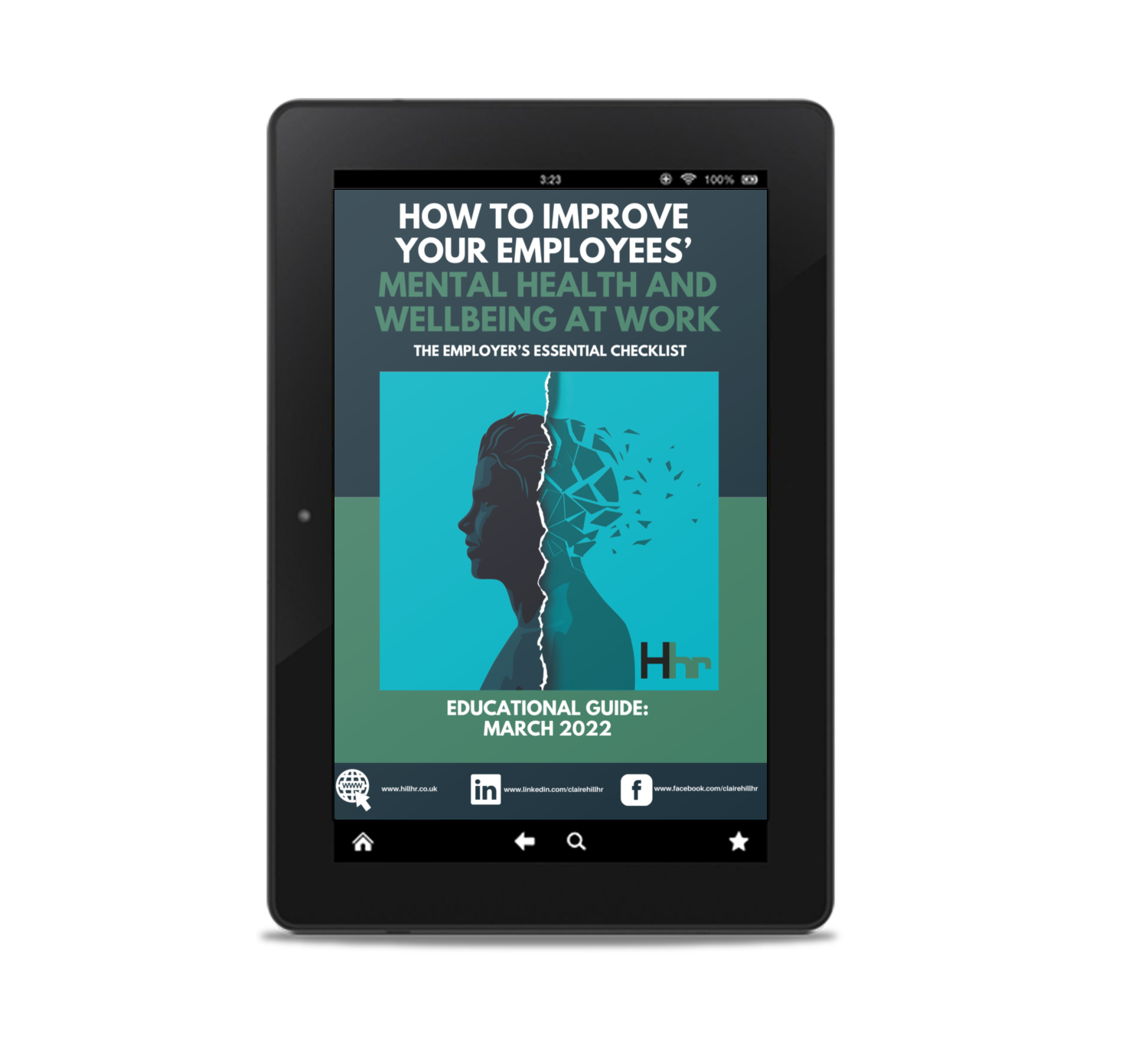
It’s been 2 years since the first UK lockdown. We’ve learnt the Greek alphabet by way of Covid variants. We have small areas in our homes set up as makeshift offices. Some of us have even tried our hand at teaching in our own home schools.
Oh, and of course we’ve been terrified our teams are going to abandon us as part of The Great Resignation.
When will it all end?!
Although I’m trivialising it, realistically it’s been a tough couple of years. Suffice to say, many of us have struggled with increased stress, anxiety and depression. People have reported feelings of isolation and loneliness. The sense of the unknown has very much taken its toll.
So, now more than ever, we, as employers and managers, need to put a real emphasis on our people’s mental health and wellbeing.
That means looking at the ways we can improve happiness at work, and the ways that we can help to effect happiness outside of work, too.
To help you along the way, I’ve created a practical checklist. The idea is that you can use this in your workplace to help you identify which areas you’re already taking care of and which areas need a little more attention. And you can refer back to it as often as you need to.
But remember, this isn’t going to be a quick fix. To really make and maintain a mental health positive workplace you and your team need to be constantly monitoring and developing your policies and initiatives. It will always be a work in progress.
And you’re not alone. If you don’t already take a keen focus on mental health and wellbeing it can seem like a mammoth task to start. But it’s never too late! If you need help, we’re here for you. Just give us a call.
Create opportunity for learning and development
Helping your people to start thinking about their personal and professional development can be a key step in creating a better sense of wellbeing in your workplace.
Work with your team to set goals for learning new skills and knowledge, and provide the relevant tools and training to keep them on the path to success.
Not only will providing opportunities for personal growth help boost your people’s mental health, but it will also give you a far more engaged workforce.
Helping your people to create goals around their personal and professional development will demonstrate your investment in them and in turn boost their loyalty to you, and their motivation to achieve.
To boost employee learning, make sure you:
- Provide suitable mentoring and coaching
- Create performance development plans
- Set a training budget for employees
- Aid employees working towards qualifications
- Arrange innovation workshops
- Schedule expert-led training sessions
- Book inspiring expert speakers
Identify and reduce workplace stress
Causes of stress in the workplace can be many and varied. And it doesn’t stop once the working day is done.
In fact, if your people are facing stress and anxiety caused by a work-related issue, it can have a detrimental effect on their personal life and even their physical health.
Of course, there is an element of stress to most jobs. However, it’s really important that, as an employer, you identify causes of unnecessary and excessive stress and work out how you can reduce it as best as possible.
This could include looking at:
- Reducing unmanageable workloads
- Cutting back on OR increasing voluntary overtime
- Improving poor communication
- Providing additional resources
- Supplying the correct tools for the job
- Improving strained working relationships
Prioritise physical health
Often, employers spend a long time considering how mental health can be impacted at work, but they don’t address physical health.
And physical health, or neglecting good physical health, can have a knock-on effect on our mental health, too.
Take a look at the ways you could be supporting your team in improving and maintaining good physical health. When you do, you’ll notice a significant improvement on the collective mental health of your team as well.
Ways you could encourage good physical health at work:
- Subside membership to a local gym
- Organise a running or walking group
- Encourage healthy eating (look at what your canteen/vending machine/office kitchen has to offer and make necessary changes)
- Offer paid time off for health checks and vaccinations
- Arrange a cycle to work scheme
- Offer a free smart watch subscription (if employees score a number of exercise points each month, the company will pay the subscription fee)
- Suggest flexible working for better work/life balance
Encourage positive social relationships
We spend a lot of time at work. It’s important that we develop and maintain a good bond with the people we work with.
Not only does this contribute to a cohesive workplace culture, but it also means motivation and productivity are high, and it can reduce work-related stress and anxiety.
To boost social relationships within your business you could try:
- Arranging an annual get-together
- Creating a buddy system for new employees
- Sharing personal achievements, companywide
- Celebrating occasions, like birthdays, national days, or festivities
- Setting up an informal intranet or Teams channel
- Arranging regular social events, like post-work drinks, an activity, or a quiz night.
Nurture professional relationships
While your people may get on well socially, are they able to put personal relationships aside when it comes to work?
As well as this, it’s important to create good bonds between employees and managers. Not only does this open good lines of communication, but it nurtures a trust that means any problems can be discussed and tackled quickly and efficiently.
It isn’t always easy to establish open manager/employee relationships, so it’s important that you communicate effectively and consistently with your entire team.
To strengthen bonds, you could:
- Schedule regular 121s with all employees
- Arrange team meetings to keep everyone up to date
- Check in with managers to make sure they’re happy
- Organise manager leadership training
- Give employees a ‘safe space’ in case they need to discuss issues they’re having with their manager
Provide a supportive environment
In order for your employees to become more open and honest about their mental health and wellness, your management team needs to make it clear that they are approachable.
Let everyone know that your managers have an open-door policy. That anyone can drop in to discuss anything that’s on their mind in a safe environment. You staff should feel able to talk freely about mental health. To help encourage this, you could:
- Arrange mental health training or workshops for managers
- Appoint a ‘mental health champion’ who all staff can speak to
- Treat physical and mental health as equally important
This could also include creating a mental health support library:
- Provide contact details for organisations that offer support
- Give details of workplace support that is provided
- Include documents or information and advice documents
- Suggest apps that staff may find useful
- Provide a reading list of mental health support books.
If Hill HR can help your business improve its staff’s well-being any HR support, please contact us.

